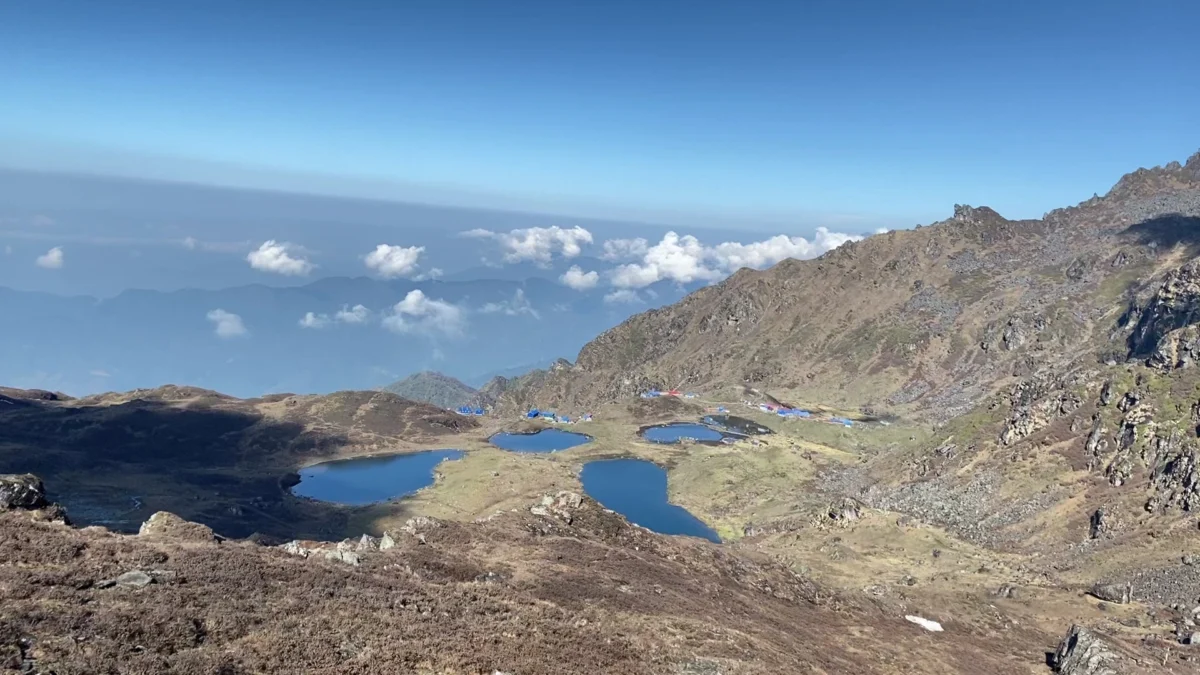
“If you’re planning to trek Panch Pokhari in monsoon season, here’s everything I wish I knew before going what it’s like, how hard it gets, how much it costs, and why I still think it’s 100% worth it.”
Quick Things to Know Before You Go:
- Expect rain, fog, and slippery trails — it’s not easy, but it’s unforgettable.
- Monsoon adds beauty but also delays and surprises.
- Bring good rain gear, warm clothes, and keep your pack light.
- The people along the trail are some of the kindest you’ll ever meet.
- Budget around NPR 5,000 for the full trip.
Day 1: From Shivachowk to Tuppi Danda
Our trip started at 6 AM with a bus from Shivachowk (NPR 650 per person). By 11:30 AM, we reached Chhimti – the last stop before the hike began.
We had lunch and started walking around 12:30 PM. At first, the path was just damp. We saw the Dragon Jharna waterfall, though it was barely flowing. After crossing a bridge, the stairs began and didn’t seem to end.
An hour later, we reached Deurali, and by 4 PM we were at Tuppi Danda. Some friends were already exhausted, especially since it was their first trek. Most trekkers had gone ahead and the next stop had few lodges, so we decided to stay the night.
We had tea, took a short nap, then dinner while it rained and the wind blew hard. A real monsoon welcome.
Day 2: Tuppi Danda to Panch Pokhari – Rain and Generous Hearts
We woke up at 5 AM. For breakfast, we made Satu with hot water from the hotel a quick and cheap meal.
The walk to Tangu Khola was okay, but a bit slippery. After crossing another bridge, we climbed to Rato Matey in about an hour. We had tea, then continued upward.
The trail from Chokar to Nasimpati was both beautiful and tough. Fog covered the trail, but rhododendrons and bird sounds made it peaceful.
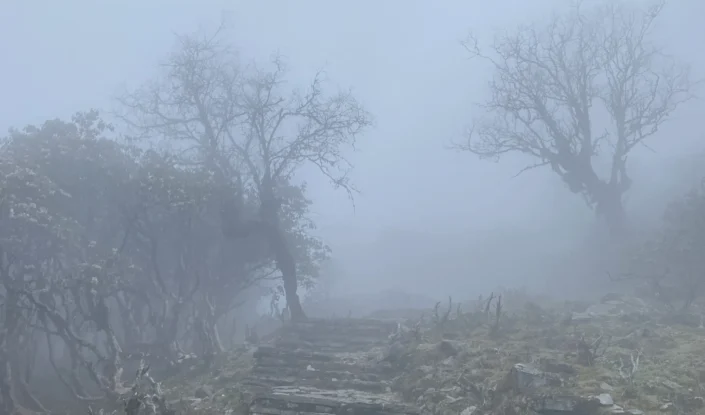
caption: Fog,footwork on the way to Nasimpati.
By the time we reached Nasimpati, we were starving. We looked around for a place to eat and finally found a hotel. We asked the owners if they could make us lunch, and they kindly agreed. Just as we settled down to rest, it started raining heavily outside.
Luckily, we had made it just in time and didn’t get caught in the rain. One of our friends was feeling cold and unwell, so the hotel owners offered us a blanket and even suggested a room to rest in. We stayed close to the fire while our lunch was being prepared, warming up and feeling thankful for their kindness.
By 2:30 PM, the rain stopped. We left extra bags at the hotel and continued with only what we needed. That made the climb easier.
Note: Make sure to carry enough water and snacks from Nasimpati, as there are no shops or places to refill between Panchpokhari and Nasimpati.
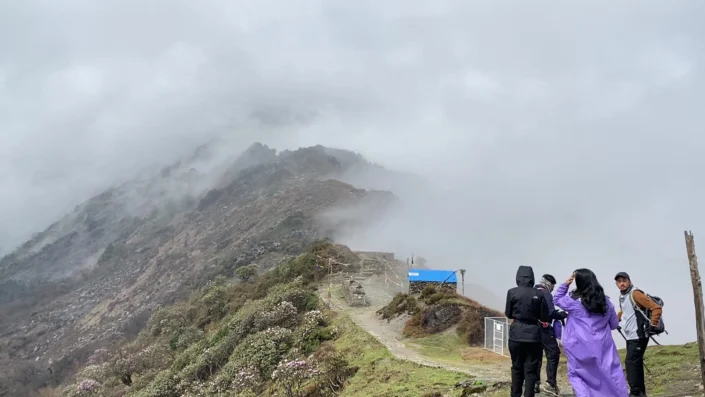
caption: Resuming the trek from nashyampati
Until Laurebina. That stretch was steep, freezing cold, and the rain kept pouring without a break. The wind slapped our faces and our clothes were already damp. On top of that, the fog thickened so much that at times, we couldn’t even see the person walking just a few meters ahead. It felt like walking into a wall of mist. We put on our raincoats, tightened our hoods, and pushed through step by step, hoping we were still on the right trail.
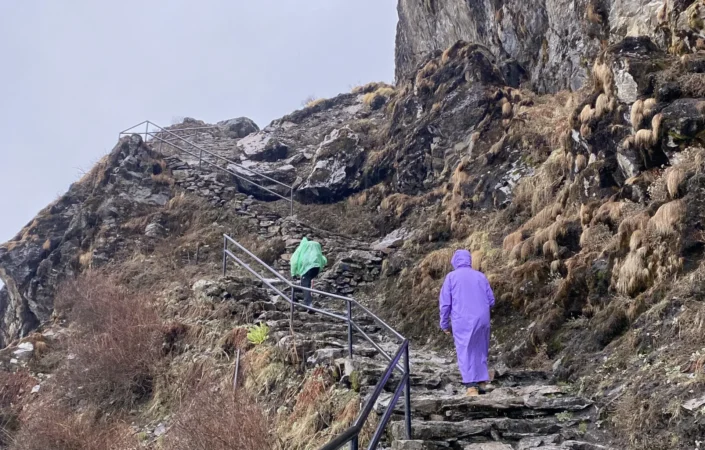
caption: Climbing the stairs of laurebina
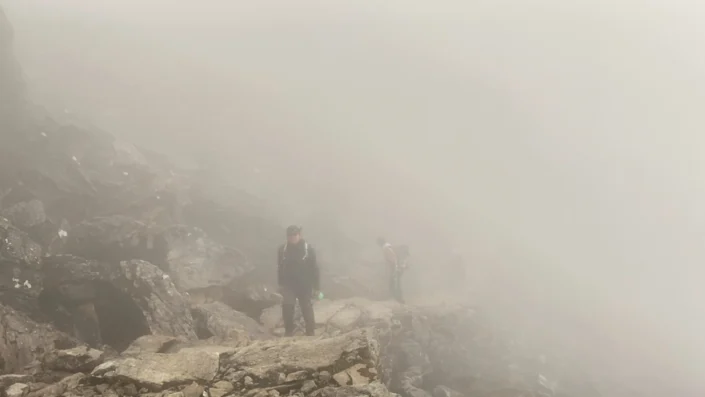
caption: on the way to panchpokhari
We finally reached Panch Pokhari around 6 PM, completely drained from the uphill climb and the cold. We started looking for a place to stay, but one by one, every hotel and lodge we passed was closed. The sky was getting darker, our energy was almost gone, and one of our friends wasn’t feeling well. We were honestly starting to panic a little, wondering if we’d have to sleep out in the rain.
Finally, right at the far end of Panch Pokhari, we spotted two hotels. The first one was fully packed. Our hearts sank. But thankfully, the second one had space. It wasn’t fancy, but it was dry, warm, and safe exactly what we needed.
Later, we learned that the lodges here follow a queue system. Each one takes turns operating, so all local families get a fair chance at earning. That’s why so many places were closed it wasn’t abandonment, it was community fairness. A thoughtful system that says a lot about the people who live here.
Day 3: Mist, Jugal Himal, and the Five Lakes
I woke at 2 AM, hoping for a starry sky but the clouds said no. But at 4 AM, the fog began to lift. A full moon appeared over the hills.
We started the hike to the viewpoint at 4 AM and got there by 5 AM. The sky kept changing fog, then clear views. We saw Panch Pokhari and Jugal Himal. No sunrise, but the view was still amazing.
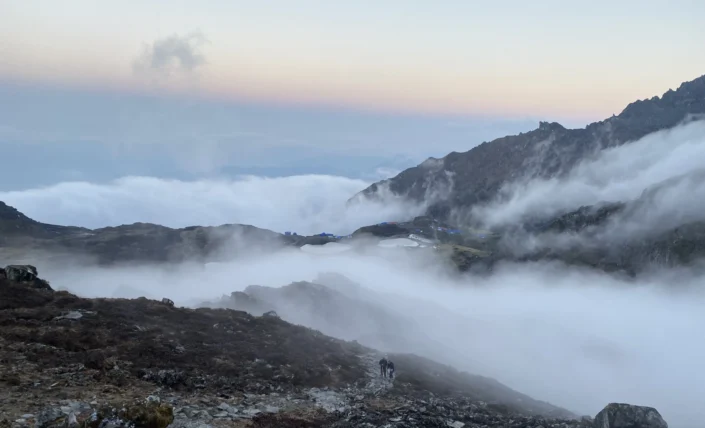
caption: early morning panch pokhari
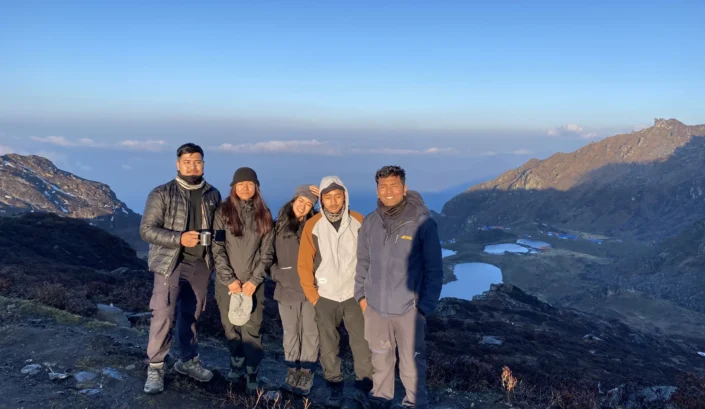
caption: group photo from panchpokhari viewpoint
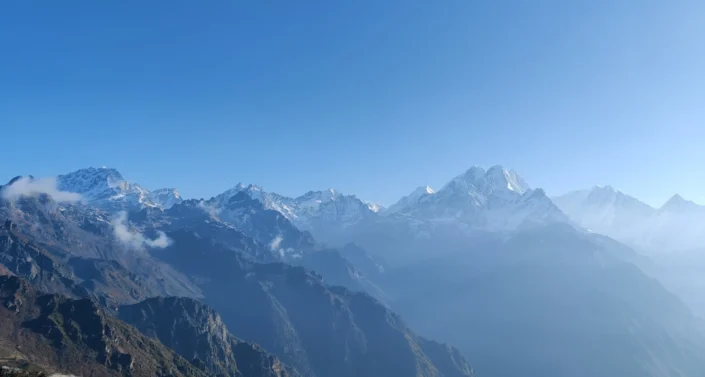
caption: jugal himal from panchpokhari
🏔️ Viewpoint Tip:
There’s a small lodge at the top, run by a friendly couple.They gave us tea and let us sit by their fire. They can accommodate 15–20 guests, ideal if you want to catch sunrise without an early hike.
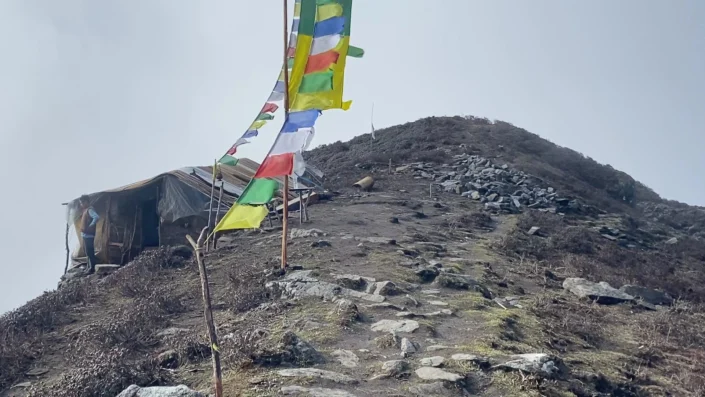
caption: lodge at viewpoint
After taking in the incredible views from the viewpoint and clicking photos of both Jugal Himal and the stunning Panch Pokhari lakes, we just stood there for a while, soaking it all in. It felt like we could have stayed there forever. Once our hearts were full, we slowly made our way back down to the homestay.
We kept our bags there and headed straight to the Panch Pokhari temple. We did a simple pooja, lit some incense, and spent a few quiet moments. It was peaceful. A calm pause before heading back into the world below. Only after that did we return to the lodge to rest and get ready for the journey down.
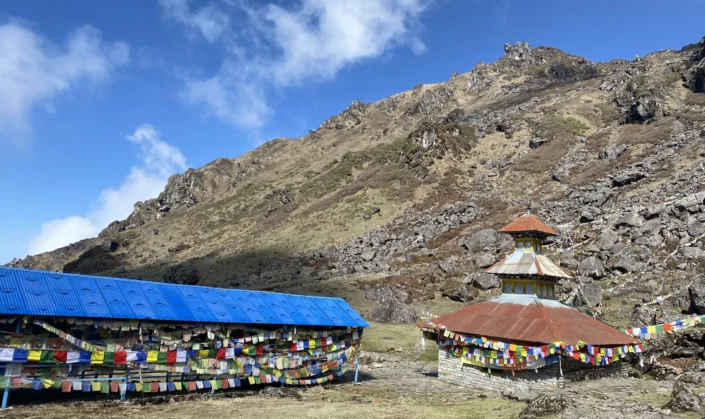
caption: panchpokhari temple
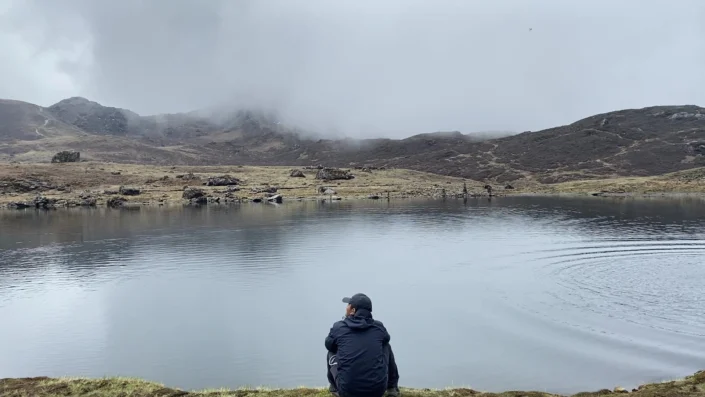
caption: one of panchpokhari lake
Going downhill in the rain is no joke. The trail was slippery and tiring.
At Nasimpati, we picked up our bags. Locals saw how tired our group was, especially our sisters, and kindly offered to carry some of our bags to Chokar. That really helped us.
We stayed the night again at Tuppi Danda, this time at Kale Dai’s place a warm-hearted local who gave us great hospitality. He was friendly, the place had Wi-Fi, and it was cheaper. We had a lot of conversations regarding our trek and heard a lot of stories from him.
Day 4: Getting Back to Kathmandu – Bus, Jeeps, and Hot Weather
We stayed the night at Tuppi Danda, hoping to catch the 8 AM bus from Chhimti. But one of our sisters wasn’t feeling well, so we got delayed and missed it.
Thankfully, Kale Dai made a quick call to a hotel in Chhimti and arranged a jeep for us. We walked down, had lunch at the hotel, and the owner kindly let us rest in one of the rooms until the jeep arrived at 1 PM.
Looking back, one of the best parts of this trek was the people—their warmth, care, and willingness to help. They made us feel at home even in the middle of nowhere.
Coming down from the cool, quiet mountains into the hot and noisy city was tough. We already missed the chill, the fog, and the kindness of Panch Pokhari. If you want to catch it, stay in Chhimti or Deurali. Buses leave at 6 AM, 8 AM, and 12 PM.
Cost Summary (Per Person)
- Bus to Chhimti: NPR 650
- Lunch at Chhimti: NPR 330
- Tuppi Danda (Day 1 stay): NPR 640
- Nasimpati lunch: NPR 400
- Panch Pokhari lodge: NPR 1,000
- Tuppi Danda (Day 3, Kale Dai): NPR 410
- Jeep back to Kathmandu: NPR 900
Total: Around NPR 4,500–5,000
Monsoon Trekking Tips for Panch Pokhari
- Good rain gear is a must. A waterproof jacket, pants, and a backpack cover will make your life easier.
- Wear proper trekking shoes with good grip. The stairs and trails get super slippery in the rain.
- Pack light. Carry only what you need. Less weight = easier climbs.
- Bring warm clothes, even in monsoon. The higher you go, the colder it gets.
- Carry quick snacks like dry fruits, energy bars, and Satu powder to keep your energy up.
- Always have a water bottle. Refill it whenever you find safe drinking water.
- Don’t forget a small first-aid kit with pain relievers, band-aids, and medicine for altitude or cold.
- Respect the trail and locals. Carry your trash, support local lodges, and be kind.
Final Thoughts: Is Trekking to Panchpokhari In Monsoon Worth It?
Our rainy season trek to Panchpokhari was tough ,foggy, wet, and physically exhausting but it turned out to be one of the most heartfelt journeys we’ve ever taken. Monsoon trekking isn’t for everyone. The paths are slippery, the rain can feel endless, and the fog hides the views. But with the right mindset and a bit of determination, it becomes something truly special.
The peaceful lakes, the kind strangers we met along the way, and those quiet, misty forests stay with you. It’s not a perfect trek ,your clothes will be soaked, your legs will ache but if you love nature, don’t mind the rain, and enjoy stillness away from the noise, this place will speak to you.
Panchpokhari during the monsoon is hard but that’s what makes it beautiful. The harder the climb, the deeper the memory.
🌧️ If you’re up for the challenge and go in prepared, monsoon trekking in Nepal might just show you a side of the Himalayas most never see. If you love trekking in Nepal, you might also enjoy reading about my experience on the Top 10 Reasons Why You Should Visit Tsho Rolpa and Dudhkunda Lake . It’s another unforgettable adventure full of breathtaking views and unique challenges.
💬 Share Your Thoughts!
Have questions or planning your own Panchpokhari trip? Drop a comment below or connect with me at:
📸 Follow my adventures on Instagram: @being__phurba


No Comments